
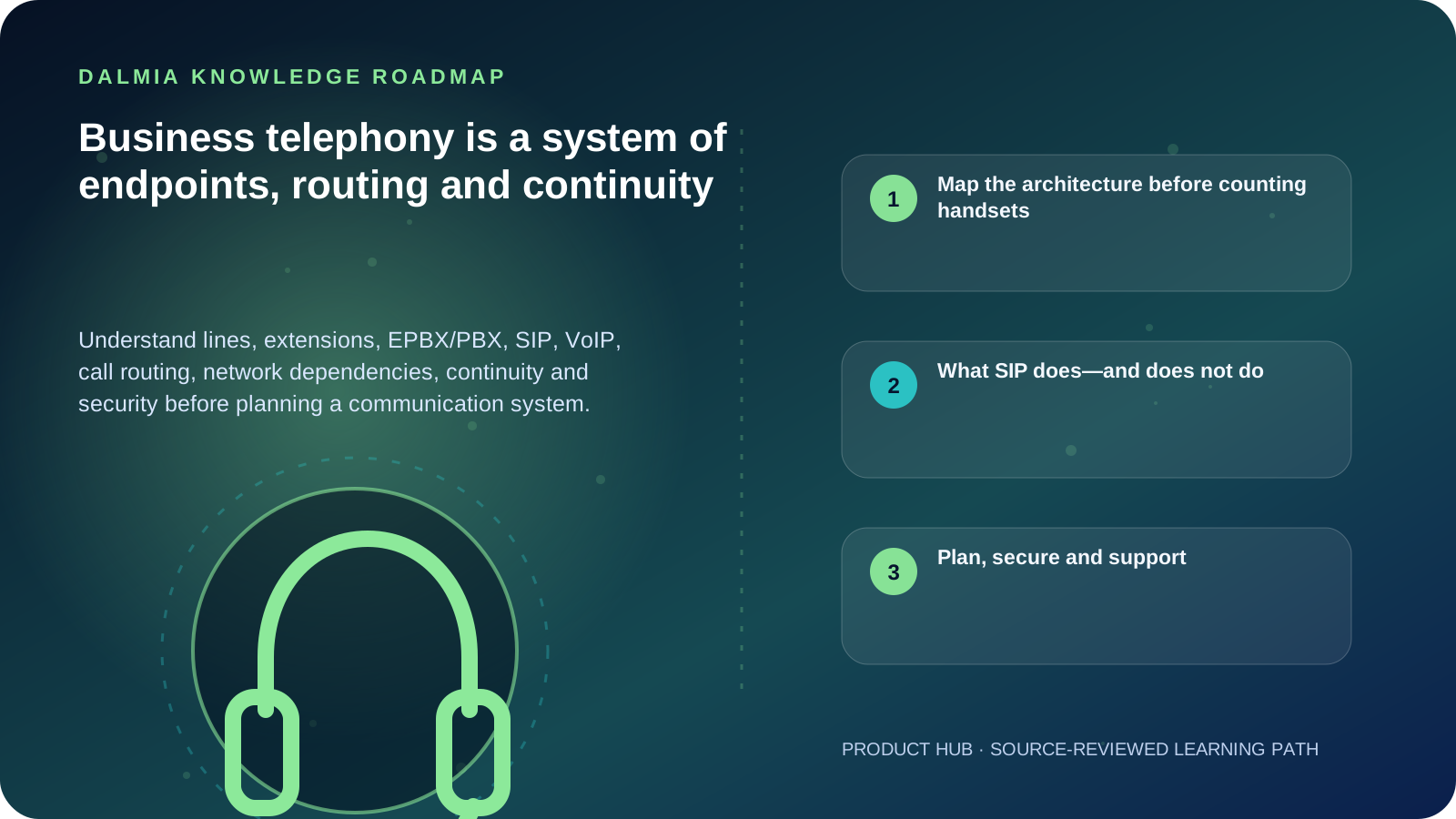
A telephone system connects external lines or services to internal endpoints and applies routing rules such as extensions, groups, transfers and time schedules. Traditional and IP-based systems have different wiring, power, network and security dependencies. SIP is a signaling protocol for establishing, modifying and ending sessions; it does not by itself guarantee voice quality, internet continuity, encryption or emergency-call behavior.
Map the architecture before counting handsets
| Layer | Questions to answer |
|---|---|
| External service | Analogue line, SIP trunk or another provider service; number ownership and failover |
| Control | PBX/EPBX or hosted platform; extension plan, permissions, time rules and call groups |
| Endpoints | Analogue, digital, IP or softphone; power, ports, headsets and user needs |
| Network and power | LAN, VLAN/QoS design, PoE, router, internet and backup-power dependencies |
| Security | Administration, credentials, updates, remote access, call records and fraud monitoring |
| Operations | Reception flow, after-hours routing, escalation, recording policy and recovery procedure |
What SIP does—and does not do
RFC 3261 defines SIP as an application-layer signaling protocol that can create, modify and terminate sessions such as internet telephone calls. It supports locating users, negotiating capabilities, setting up sessions and managing them.
Audio media commonly travels through other protocols and infrastructure. A SIP-compatible label therefore does not prove trunk compatibility, codec support, encryption, call quality, NAT behavior or every PBX feature. Verify the complete interoperability matrix.
Plan, secure and support
VoIP security checklist
Separate voice and management risks, protect administration and plan monitoring and recovery.
ExploreTroubleshoot call quality
Classify delay, jitter, loss and audio-path symptoms before changing a live PBX.
ExplorePower continuity
Account for PBX, router, switches, PoE endpoints and provider equipment in the essential load.
ExploreTelephone product route
Use the public route for current product and requirement discussion after mapping the system.
ExploreSources and further reading
Technical statements were reviewed against these references. External pages may change after our review date.
- RFC 3261: SIP — Session Initiation Protocol — RFC Editor
- NIST SP 800-58: Security Considerations for Voice Over IP Systems — National Institute of Standards and Technology