
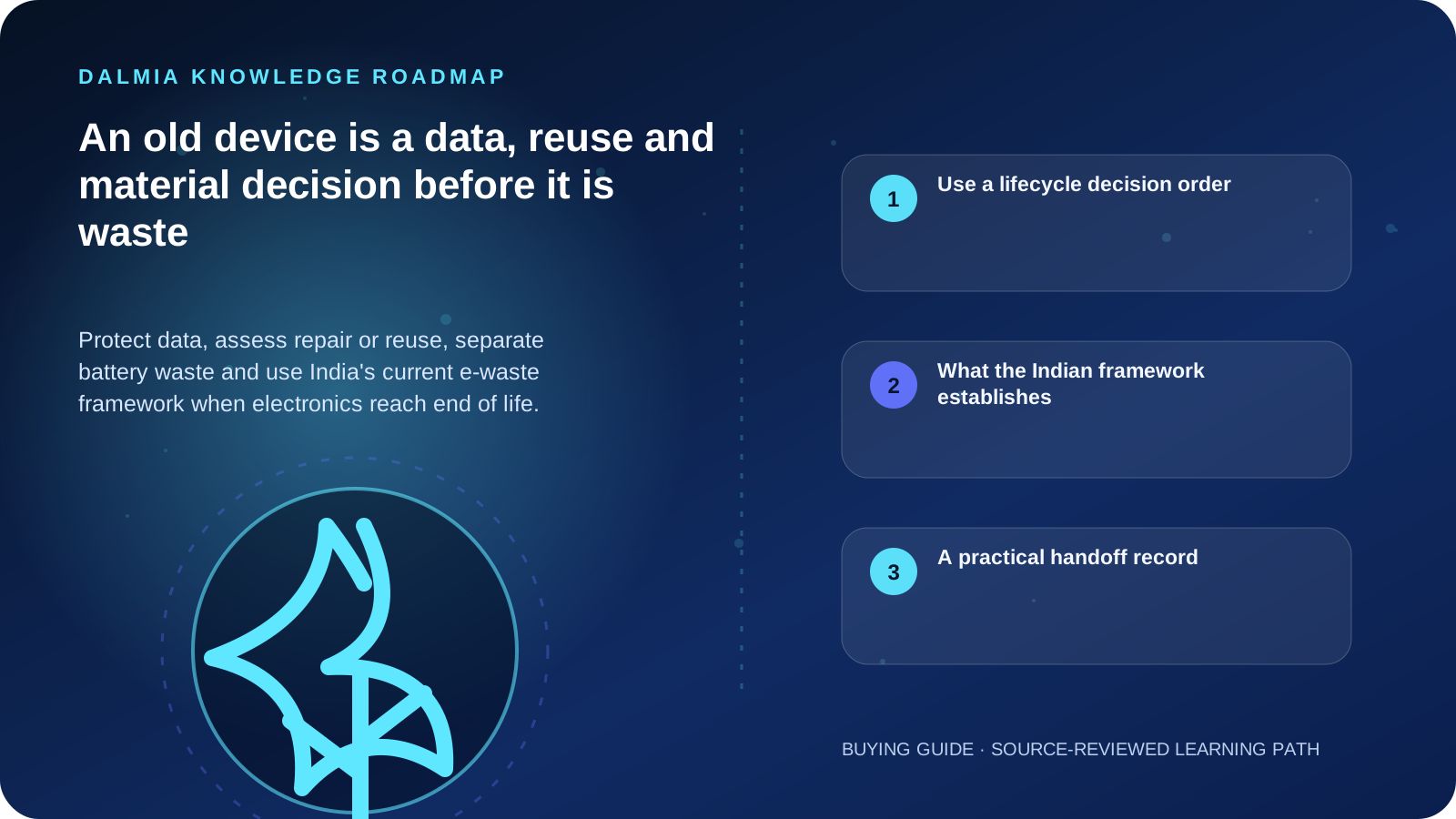
Back up and securely remove personal or business data before handoff, then assess whether the equipment can be safely repaired, reused or refurbished. If it is genuinely e-waste, keep it out of mixed waste and informal burning or unsafe dismantling, and use an appropriate producer, collection or registered recycling channel. India's E-Waste (Management) Rules, 2022 took effect on 1 April 2023; waste batteries are governed separately under the Battery Waste Management Rules.
Use a lifecycle decision order
- Inventory the device, owner, serial or asset reference, storage media, accessories and battery.
- Back up required data and confirm that the backup opens before changing or handing over the device.
- Assess safe repair, upgrade, reuse or refurbishment before declaring the equipment waste.
- Use the exact manufacturer or operating-system process for account removal, encryption handling and secure erase; a simple file delete may not be sufficient.
- Separate removable batteries and damaged batteries according to their own safety and regulatory process.
- Document the receiving producer, collection centre, refurbisher or registered recycler and retain the handoff record where the device contains business data.
What the Indian framework establishes
The E-Waste (Management) Rules, 2022 cover listed electrical and electronic equipment and set responsibilities for manufacturers, producers, refurbishers and recyclers. CPCB's FAQ explains that the objective is environmentally sound management that protects health and the environment and that the framework uses extended producer responsibility and registered recycling.
Rules and registered entities can change. This page is educational, not legal advice or a list of currently approved local collectors; verify the current CPCB, State Pollution Control Board and producer information at the time of handoff.
A practical handoff record
| Record | Why | Boundary |
|---|---|---|
| Device and storage inventory | Prevents forgotten drives, cards or accounts | Do not publish serial numbers or customer data |
| Backup verification | Confirms required information is preserved | A backup is useful only when it can be restored |
| Erase/account-removal method | Shows the chosen data-protection process | Match the exact device, encryption and organization policy |
| Battery condition and route | Keeps damaged or waste batteries inside the correct process | E-waste and battery-waste rules are not the same document |
| Receiving channel and date | Supports traceability | Verify current registration or producer take-back information |
Sources and further reading
Technical statements were reviewed against these references. External pages may change after our review date.
- E-Waste (Management) Rules, 2022 — Central Pollution Control Board, India
- Frequently Asked Questions on E-Waste Management — Central Pollution Control Board, India
- Battery Waste Management Rules, 2022 — Central Pollution Control Board, India